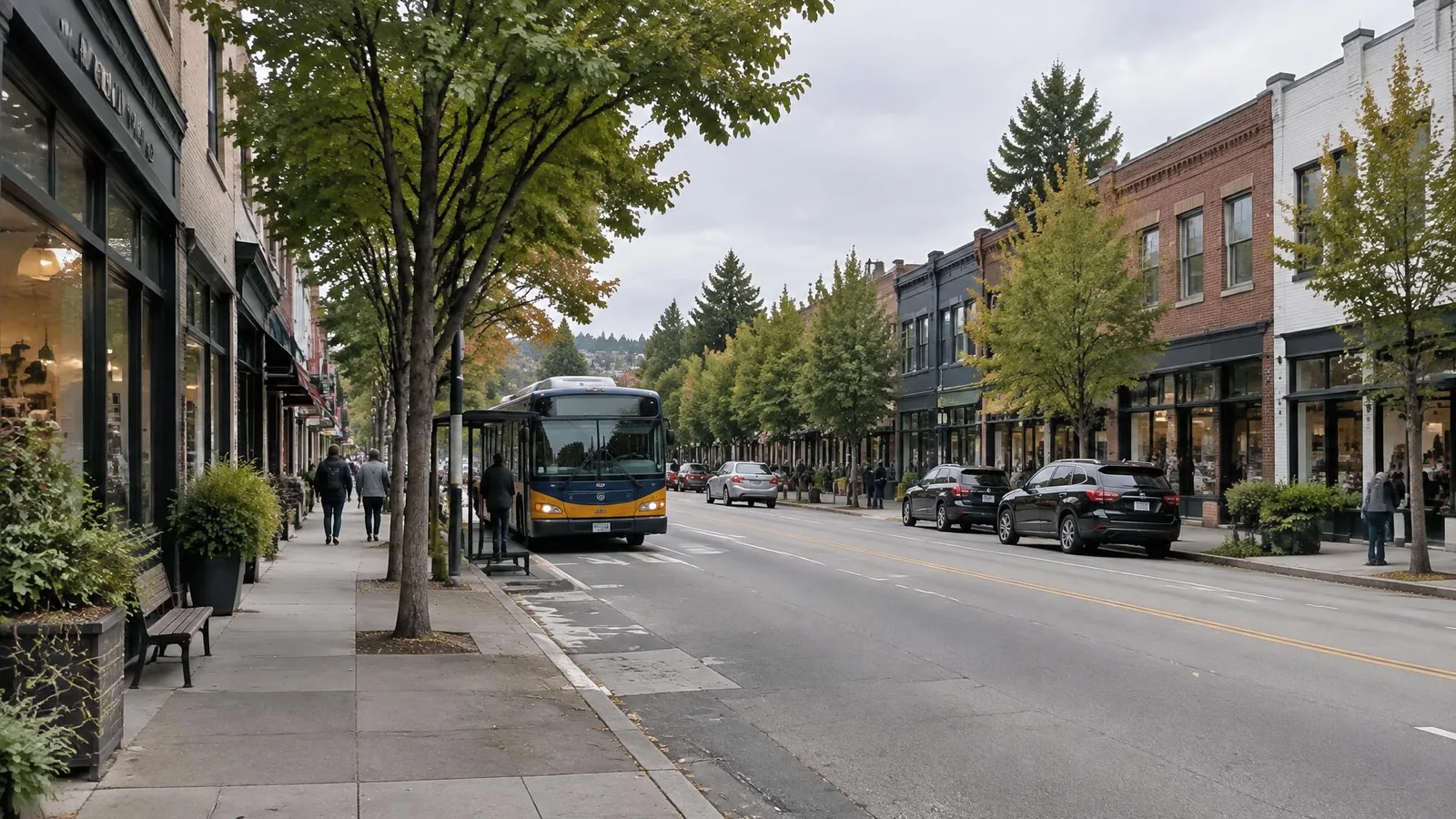
North Seattle is a broad and varied region that offers a quintessential residential experience with excellent connectivity to the rest of the city. Stretching from the shores of Lake Washington to the vibrant hubs around the University of Washington, this area is known for its established neighborhoods, abundant green spaces, and the recent arrival of the Link light rail. I often recommend North Seattle to people who want a more traditional neighborhood feel with yards and quiet streets, but who still need to get to downtown or the U District quickly. It is a region that feels solid and well-connected, with a great balance of amenities and residential peace.
What it feels like
Living in North Seattle generally feels more suburban than the central city, but with distinct pockets of urban energy. Neighborhoods like Roosevelt and the U District are busy and transit-oriented, with a mix of new apartments, local shops, and student housing. As you move into areas like Bryant, Wedgwood, and View Ridge, the atmosphere becomes much more residential. These are places where you see people gardening in their front yards and walking their dogs along quiet side streets.
The architecture is dominated by classic Seattle styles. You will find many brick Tudors, Craftsman bungalows, and mid-century ramblers. The streets are often wide and lined with mature trees, giving the area an established and comfortable feel. Maple Leaf and Ravenna offer a similar vibe, with lovely parks and small business districts that serve the local community. It is a place where you can get to know your neighbors while still having easy access to all the city's major features.
The presence of the University of Washington has a big influence on the southern part of this region, bringing a lot of activity, cultural institutions, and beautiful campus grounds that are open to the public. Further north, the feel is even more relaxed. Throughout the region, there is a strong sense of pride in the local parks and trails. It is a great area if you like a predictable and stable residential environment with good services and a high degree of connectivity.
Getting around and commute tradeoffs
The biggest recent change to North Seattle is the expansion of the Link light rail. With stations at the U District, Roosevelt, and Northgate, commuting to downtown or the airport has become significantly faster and more reliable. For many residents in these areas, the light rail is now the preferred way to get around, avoiding the often-congested I-5 corridor.
However, if you live further east in neighborhoods like Sand Point or View Ridge, you will likely rely more on cars or buses. Traffic on major east-west routes like NE 65th Street and NE 75th Street can be slow during peak hours. Access to I-5 is generally good, but the freeway itself is one of the busiest stretches in the state. If you work on the Eastside, the SR-520 bridge is easily accessible from the southern part of North Seattle, but getting to it from the north can involve a bit of a trek through city streets.
Parking is much easier here than in Capitol Hill or downtown. Most homes have driveways or garages, and street parking is usually plentiful on residential blocks. Biking is also a viable option, with many designated bike lanes and the Burke-Gilman Trail providing a major north-south artery for cyclists. The tradeoff is that some areas can feel a bit disconnected from the transit core if you are not within walking distance of a light rail station.
Homes and typical prices
North Seattle is primarily a single-family home market, though there has been an increase in townhome development near the light rail stations. You will find a wide range of home sizes, from small two-bedroom cottages to large estates overlooking Lake Washington in neighborhoods like Laurelhurst and Windermere. The variety of housing styles is one of the region's strengths.
The typical price range for homes in North Seattle is about $650K to $1.0M. The lower end of the range is usually for condos or smaller, older homes that may need some work. The upper half of that range is where you often find well-maintained three-bedroom houses in neighborhoods like Wedgwood or Maple Leaf. Prices in Laurelhurst or along the lake can be significantly higher, often exceeding several million dollars. These prices are approximate and change with the market.
When buying in North Seattle, I always suggest looking at the age of the systems in the home. Many of these houses were built in the 1940s and 50s, so checking the condition of the roof, plumbing, and electrical is essential. The newer townhomes in Roosevelt and Northgate offer a more modern, low-maintenance alternative, often with better energy efficiency but smaller outdoor spaces.
Parks, water and things to do
Outdoor recreation is a major part of life in North Seattle. Magnuson Park is a huge asset, offering sports fields, a large dog park, and access to the Lake Washington shoreline. Ravenna Park and Cowen Park provide a wonderful wooded ravine with trails that feel like an escape from the city, right in the middle of a residential area.
The Burke-Gilman Trail is a central feature for many residents, providing a paved route for miles of walking and biking. Green Lake is just to the west and is a frequent destination for people in this region. The University of Washington campus is also a great place for a walk, especially during the cherry blossom season or to visit the Burke Museum and the Henry Art Gallery.
For shopping and dining, the U Village is a major outdoor shopping center with a wide range of stores and restaurants. The smaller business districts in Roosevelt, Maple Leaf, and Wedgwood offer more local, independent options.
Neighborhoods it covers
This area includes Roosevelt, Ravenna, Bryant, Laurelhurst, Wedgwood, View Ridge, Maple Leaf, the U District, and Montlake.
Not sure this is the one?
Answer 9 one-tap questions about price, commute, home type and lifestyle and see your top 3 of 20 areas.
Common questions
- How has the light rail changed North Seattle?
- It has made the area much more accessible. Commutes to downtown that used to take 40 minutes on a bus can now take less than 15 minutes on the train. It has also spurred new development and increased property values near the stations.
- Are there mostly houses or apartments in North Seattle?
- It is predominantly single-family houses, especially as you move away from the University District and the light rail stations. However, there is a growing number of townhomes and apartments in the more urban hubs.
- What is the commute like to the Eastside from here?
- It is generally good if you are near the SR-520 bridge. From neighborhoods like Montlake or Laurelhurst, it is very quick. From further north, you might choose to take I-5 to I-405, which can be more congested.
Nearby areas
Price ranges, transit and commute notes are general guides and change often. Verify details for any specific home. Every neighborhood is open to everyone.